Short answer: Yes — buying, selling and holding USDT is legal in the Philippines. Crypto exchanges are regulated by the Bangko Sentral ng Pilipinas (BSP) under its Virtual Asset Service Provider (VASP) framework.
Is USDT Legal? (The Details)
Yes. There is no law that bans owning, buying or selling USDT or other cryptocurrencies in the Philippines. Filipinos routinely use USDT for savings, remittances, freelancing income, and trading. What is regulated is the businesses that exchange crypto for pesos — they are expected to register and follow anti-money-laundering rules. Ready to trade legally and safely? See our guides on buying and selling USDT.
How Crypto Is Regulated in the Philippines
The main regulator is the Bangko Sentral ng Pilipinas (BSP), the country's central bank. It oversees Virtual Asset Service Providers (VASPs) — companies that convert between crypto and pesos — and requires them to follow customer-verification (KYC) and anti-money-laundering (AML) standards.
The Securities and Exchange Commission (SEC) also plays a role where crypto overlaps with investment products. The overall aim is consumer protection and preventing illicit activity, not banning crypto.
- BSP — regulates crypto-to-peso exchange and VASPs.
- SEC — oversees investment-type offerings and securities.
- BIR — handles taxation of income and gains.
Is USDT Legal Tender?
No. USDT and other cryptocurrencies are not legal tender in the Philippines — only the Philippine peso is. That means no shop is required to accept USDT. But this doesn't make it illegal: you can freely hold it and exchange it for pesos whenever you like.
Do You Pay Tax on USDT?
Income and gains from crypto may be taxable under Philippine law, depending on how you earned or used it. Because everyone's situation is different, you should confirm your obligations with a licensed accountant or the Bureau of Internal Revenue (BIR).
Not legal or tax advice: This page is general information only, current as of 2026. Rules can change. For decisions specific to your situation, consult a qualified professional or the relevant Philippine authority.
How to Trade USDT Safely & Compliantly
- Trade with a reputable, verified desk that follows KYC/AML practices.
- Keep records of your trades and payment confirmations.
- Only trade funds you can account for — avoid anything you can't explain.
- Protect your wallet and never share your seed phrase.
- Ask questions if anything is unclear before you send money or crypto.
Frequently Asked Questions
Is USDT legal in the Philippines?
Yes. Buying, selling and holding USDT is legal, and crypto exchanges are regulated by the BSP under its VASP framework.
Is USDT legal tender?
No. Only the peso is legal tender, so merchants aren't required to accept USDT — but holding and trading it is legal.
Do I have to pay tax on USDT gains?
Possibly. Crypto income or gains may be taxable. Consult a licensed accountant or the BIR for advice specific to you.
Ready to Buy or Sell USDT the Safe Way?
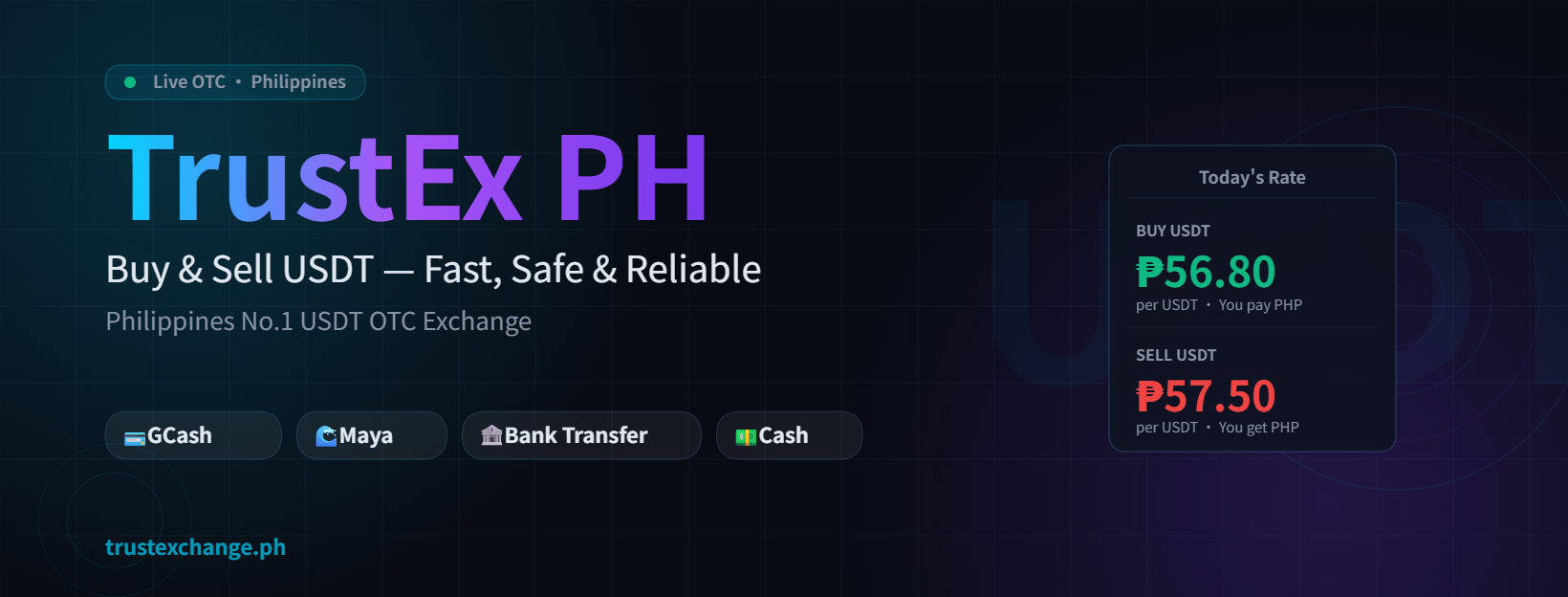
TrustEx PH is a trusted local USDT desk. Message us for a live quote and settle within 15 minutes.