How Each Fee Model Works
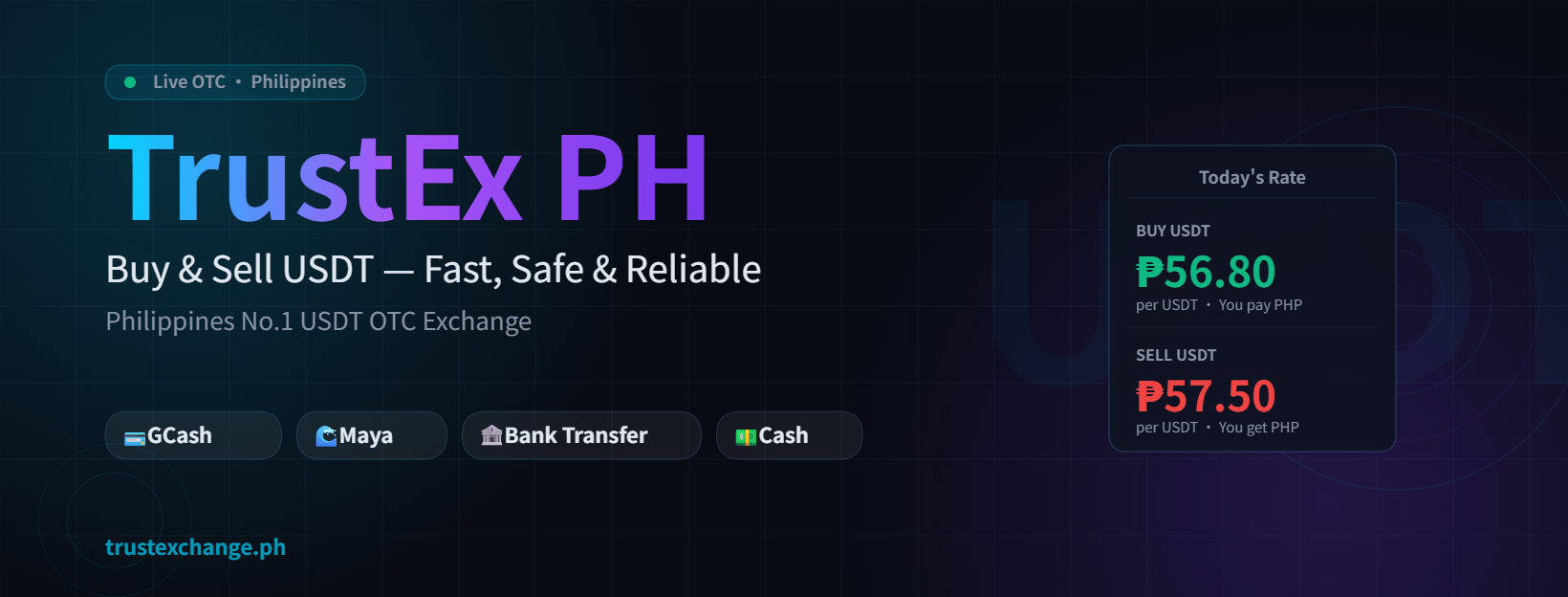
GCash, banks, and traditional remittance services usually charge a fixed fee or percentage on top of whatever exchange rate they apply — and that rate itself is often already marked up. USDT OTC trading, like with TrustEx PH, works differently: you're simply quoted a buy or sell rate with a small spread built in, and that's the only cost. There's no separate "fee" line item to track.
Want to see today's exact numbers first? Check our live USDT to PHP rate page.
Real Cost Example
Say you want to move the peso equivalent of $200 from abroad, or cash out $200 worth of USDT locally:
| Method | Typical cost | What you actually receive |
|---|---|---|
| Bank wire / remittance | Fixed fee + FX markup (often 3–7%) | Reduced by fee + weaker rate |
| GCash-to-GCash (local, same currency) | Usually free or very low | Close to full amount (no FX involved) |
| USDT OTC (TrustEx PH) | Small buy/sell spread only | Rate you're quoted is the rate you get |
For purely local peso-to-peso transfers, GCash alone is hard to beat since there's no currency conversion involved. USDT becomes the stronger option once you're converting between currencies, receiving from abroad, or moving larger amounts where remittance fees stack up fast.
When USDT Is Cheaper — And When It Isn't
- Cross-border payments or freelance income: USDT usually wins — no wire fees, no multi-day delays, and a transparent spread.
- Larger amounts: Percentage-based remittance fees grow with the amount sent; a spread-based USDT trade scales more predictably.
- Small local GCash-to-GCash transfers: Plain GCash can be cheaper since there's no conversion needed at all.
- Speed-sensitive cash-outs: USDT settlement is typically minutes; bank transfers can take days, especially internationally.
Quick rule of thumb: if a currency conversion or cross-border step is involved, compare the total cost of USDT's spread against the combined FX markup + fee of your bank or remittance option before deciding.
Watch Out for Hidden Costs
The biggest hidden cost in traditional transfers is usually the exchange rate markup, not the advertised "fee." A service can promote "no fees" while quietly applying a worse exchange rate that costs you more overall. Always compare the final amount received, not just the fee label.
With USDT trades, ask for the live market rate and confirm the spread up front — reputable OTC desks like TrustEx PH will always show this clearly before you commit.
Frequently Asked Questions
Is it cheaper to send money via USDT or GCash/bank remittance?
For larger or cross-border amounts, USDT is often cheaper thanks to a transparent spread instead of stacked fees. For small local transfers, plain GCash can still win.
What is a spread and how is it different from a fixed fee?
A spread is the small gap between the buy and sell rate — there's no separate fee on top. A fixed fee is charged in addition to whatever rate is applied, which can hide the true cost.
Are there hidden fees when trading USDT with TrustEx PH?
No. The rate you're quoted is the rate you get, with no hidden charges.
Get a Transparent Quote Right Now
Message TrustEx PH for today's live spread — no hidden fees, ever.